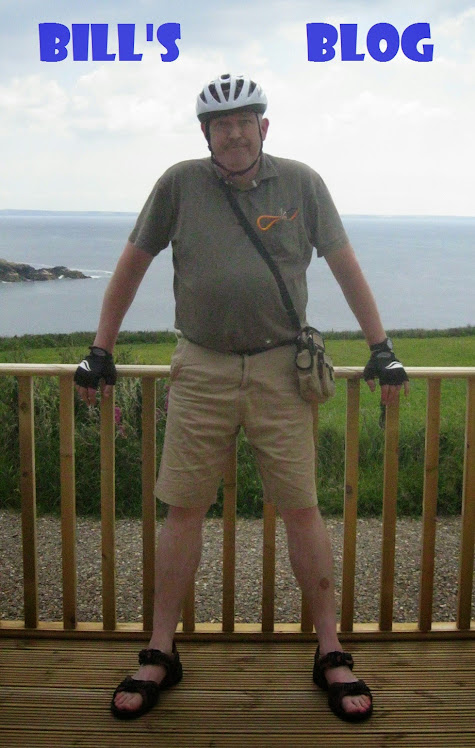
Wednesday, 29 June 2011

Chilled


I must admit I am so chilled on my holiday that I only caught up this morning with news of the "Taking the Wheel" campaign which reached Denbigh Town Hall yesterday.

Hafal Practice Leader Caroline Jones reports: "We've had a good discussion on how people with serious mental illness can take control of their lives."

Speaking on what empowered her, service user and carer Ann Edwards, 52, said: "Finding the right medication has been the greatest help for me.

"I had a breakdown when I was 24. Everything got on top of me, it was bewildering. However, it didn't take me long to find the right medication. There have been side-effects, it makes me put on weight, but I'd say my medication has been the main thing that's kept my schizophrenia under control, that's kept me balanced."

Ann cares for her husband, who also has a serious mental illness. She says attending carers' meetings has helped her manage her caring duties and her own recovery.

She said: "Going to meetings helps me a lot. I've made a few friends and found that sharing my thoughts with others makes me feel less alone.

"I get stressed at times, sometimes I have a little cry, but I've learned to manage my illness myself. I make the decisions about my recovery. I sort out a lot of things for my partner and me, we work together."

Caroline says that while it is crucial that clients are involved in choosing the right medication "this is only part of Hafal's broad ‘Whole Person' approach to recovery which encourages our clients to look at a variety of areas in their life including issues like accommodation, finance, training and education."

Quite so, Caroline, and you can see our recovery guide here.

Now I am off for another scramble around the coast (smothered in sun-block having turned beetroot in yesterday's uninterrupted sunshine) followed by more fishing. Will the elusive bass fall to my running ledger cast at low water beyond the tidal zone? Almost certainly not but hey-ho.

Tuesday, 28 June 2011

Noisy Clown


I'm on holiday (my mate Nick says it's pretentious and self-important to say you're "on leave" and I think he's right) and today I achieved a dubious variation on the triathlon concept - a 9 mile walk, 4 mile cycle ride, and 50 yard swim. The last bit was unimpressive not by reason of the cumulative physical strain but because the temperature is somewhere between "Titanic" and "The Cruel Sea". You can just see me in the picture framed by two tankers waiting to get into Milford Haven. I brought my shorty wet-suit (Asda £12.99) to the beach but don't wear it as it's a bit wussy to cheat unless you are snorkeling or similar.


I have also polished my Ray Mears credentials by finding a big specimen of parasol mushroom (macrolepiota procera) which we enjoyed for breakfast. It's great just fried in butter but our Mitteleuropäischer cousins (especially the Bohemians) like to dip it in egg and breadcrumbs first and make an excellent veggie schnitzel (usual warning - don't pick unusual mushrooms without expert advice unless you are yourself an expert: mistakes can be fatal).


Postscript:

The idea of Central Europeans as cousins is topical. We heard earlier in the week that geneticists have established that English people are closely related to the Germans. This was hardly a surprise as everybody knows that England was run, with a bit of help from the Romans, by the Welsh (then called Ancient Brits) until the Germans (then called Angles and Saxons) arrived and pushed them back to the fringes. But the Sun newspaper is agitated about this news and has provided practical self-testing tools for worried English people to check their propensity for humourlessness, leather shorts, beach-towel crimes, megalomaniacal bids for world domination, etc. But Sun readers will no doubt reflect carefully and appreciate that they are as much the cousins of Handel, Goethe and Frederick the Great as they are of that noisy clown Richard Wagner, wicked supremacist Oswald Spengler, and, yes, him. We can all choose which of our relations we should emulate.

Monday, 27 June 2011

More Pollacks


It's my birthday and I spend it fishing with my brother in West Wales at a favourite "mark" which involves a difficult climb down a cliff on a promontory overlooking St Brides Bay (my picture shows the view higher up looking west to the scattering of rocks south of Ramsey Island). But the reward is being able to cast into deep water and so increase the chance of good size fish - pollack, mackerel, disappointing wrasse or highly-prized bass - especially in not so good weather and modest tides, both conditions applying today.

We find an elderly lady already down there using sand-eel under a float. She explains that she is a widow whose husband on his death-bed earnestly begged her to promise him not to climb down this very cliff after he was gone, an understandable request as it is a dangerous spot. But she was clear at that time that she would climb the cliff in future to fish. So I said "Did you tell him a white lie to put him at his ease?" She was surprised by this and said that on the contrary she told him she could not make the promise. On reflection I think she made the right ethical call on this. It is a mistake to over-indulge people nearing death about matters in the future. She may have given her husband a little anxiety but I dare say he respected her honesty. And of course she could go ahead and take the risk of climbing the cliff in future (as she had for some years) without a qualm.

Feathers don't work so I try a rag-worm 5 feet under a float. Nothing happens when I cast it 30 yards and leave it for 15 minutes but when I reel it in it is grabbed violently when it is just a few feet from the rocks. The rod bends double when I strike and a huge pollack is landed with some difficulty, sufficient for my and Mrs B's dinner. That's all we catch but the old lady very kindly gives us two pollack which my brother takes home for his dinner.

Wednesday, 22 June 2011

Môn Mam Cymru


Hafal's intrepid microbus crossed the water courtesy of Thomas Telford to Wales' premier island bringing the “Taking the Wheel” campaign to Holyhead where service users and carers have been discussing the campaign’s theme of empowerment during today’s event.

Hafal's family worker Cathrin Jones (pictured above with some of the state-of-the-art touch-screen technology with which the vintage van is rammed) reports:

“We’ve had a good discussion on how people with serious mental illness can take control of their lives today.

“One factor often neglected is that users have their own caring or parenting responsibilities. For example among the service users we support on the island there are people who as well as dealing with their own mental illness have partners with physical disabilities.

“Users' own caring responsibilities are covered as one of the eight life areas in the Mental Health (Wales) Measure and we certainly hope it’s something that is included in the new Care and Treatment Plans which come into force when the Measure is implemented on January 1st 2012.

“Unfortunately, this issue has often been neglected in the past as there is a tendency to concentrate on immediate symptoms of service users’ illness rather than also looking at their wider life including their responsibilities for others.”

Good point. We await publication of the Measure's Regulations following the recent consultation - we fear that there won't be consistent planning for patients' responsibilities as mums or dads or other caring duties unless there's a specific place in the Care and Treatment Plan format to record it in (or to confirm that they don't have any such responsibilities for the time being)...


Giraldus Cambrensis called Ynys Môn the "Mother of Wales" because of her alleged capacity to feed the country. He couldn't have predicted that she would also be able to heat and light much of Wales with her two Wylfa nuclear reactors pumping out nearly one billion watts (output which might more than double if they replace the reactors).

"Non-Compliant"?


I am contemplating the excellent feedback we had last week from a major training event on treatments for serious mental illness. We went into detail about both medical and talking therapies, assisted by our good friend and leading Welsh mental health pharmacist Wendy Davies from Cardiff and Vale LHB and the pioneering team of talking therapists from Hywel Dda LHB.

Discussion about antipsychotic and other mental health drugs has been clouded in ideological squabbling over the years, between the antipsychiatric "movement" on the one hand and over-defensive doctors on the other. Much of this debate has left out the people who matter - the patients and their families who aren't interested in philosophical hair-splitting about the nature of mental illness but who do want the best treatments available to aid recovery and improve the quality of their lives.

Information, negotiation, and being prepared to try things out are the way forward for patients who still often find it hard to get their own view heard let alone be offered choices.

I do think there is an important but neglected point which has been lost in the fog of controversy. Some patients (by no means all) tell us rationally enough that the side effects arising from their specific experience of antipsychotic medication for them outweigh benefits which they acknowledge (of course sometimes treatment just doesn't help but that's quite another matter) so that they want to discuss whether they might manage better without medication.

I do not detect much sympathy for this group of patients who are not behaving irrationally, still less trying to make an antipsychiatric point, but trying to achieve the best result for themselves. However, they are often labelled "non-compliant" and lumped together with patients who might indeed be failing to take their medication by reason of their mental illness.

Nobody is pretending that it is easy to distinguish rational and less rational reasons why patients form their opinions about medication but there should be much more effort put into talking therapies which directly address symptoms of serious mental illness or else assist people to adapt themselves to live successfully with their symptoms rather than take drugs which can severely debilitate them.

Is it not reasonable, for example, for some people who hear voices to wish to come to terms with that symptom and avoid using powerful and toxic drugs in an attempt to dampen down or remove those voices, if that works better for them? But where is the support for such an approach? Is it considered seriously as an option?

Of course this isn't going to work for everybody and may indeed only be a serious option for a minority of those with psychotic symptoms, at least on the basis of current knowledge (whereas the use of medication for lower level mental health problems could and should be drastically reduced). Our strong advice is that patients do not stop taking or reduce their medication without discussing the issues with their doctor. But there is no harm in asking, especially if you are having a lot of problems with side-effects (and, anyway, a different drug might improve matters).

For Hafal's comprehensive guide to treatments for severe mental illness, both medical and psychological, see here.

Monday, 20 June 2011

Inexplicable


There is no simple explanation of why Shakespeare wrote such a nasty play as The Taming of the Shrew, a production of which by the Festival Players Theatre Company I saw yesterday in Dinefwr Park.

There is much good stuff in the play but you can't get away from the essentials of the plot which involves the bullying and abuse of a single-minded woman into submissive, blind obedience by her jocular and borderline psychopathic husband, apparently a satisfactory result for the playwright. People who don't know Shakespeare well might find this unsurprising, considering the play was written over 400 years ago, but in fact this is quite out of character for the open-minded WS who wrote good parts for women (well, men playing women) and clearly had no perception of them being in any way inferior.

Some people think that the Merchant of Venice is also a "problem play" because of the portrayal of Shylock but it has never seemed to me that the play is antisemitic - Shylock is indeed wicked but also all there as a human being. But there's no getting round the discomfort of this play.

In recent years many actresses have played Katherine's submissive speech at the end of the play with heavy irony, implying that she doesn't mean it but is somehow playing along for laughs or to avoid further abuse. But that is a bit desperate and hats off to this production for playing it straight and letting the audience judge for themselves.

Maybe the only explanation is that Shakespeare was crudely and unjustifiably expiating some fiercely held personal feelings (if so this was unusual because his work is frustratingly short on clues to his personality). Did he leave Stratford because he was bullied by Anne Hathaway? Or was there another woman he had taken up with in London who ran him around? Only the discovery of a cache of his private letters will tell us. I once shocked the Church Warden of Holy Trinity Church, Stratford, by suggesting that they dig him up and see what was buried with him, notwithstanding the curse he placed on his grave...

Good frend for Iesvs sake forbeare,
To digg the dvst encloased heare.
Bleste be ye man yt spares thes stones,
And cvrst be he yt moves my bones.


Wednesday, 15 June 2011

Every Little Helps


The “Taking the Wheel” campaign microbus reached Ebbw Vale Tesco's today in the unseasonal rain but spirits were not dampened.

Hafal Practice Leader Pam Johnson said: “We’ve been particularly interested in looking at how service users can take control of their recovery by creating their own recovery plans – a key area in the Taking the Wheel campaign.

“Today staff and clients were talking about an exciting new development which means service users can gain qualifications accredited by Agored as part of their work in developing and implementing their own recovery plan."

Indeed they can - contact Irene Hogan at our Training Centre for details.

Interesting factoid: apparently Tesco takes 1 in every 9 pounds spent by shoppers (a figure I don't find hard to believe as they seem to get most of mine).